ServicesWindow Replacement
Window Replacement in Sammamish
We replace fogged, drafty and failing windows with new units that are flashed and sealed correctly. We measure in spring and summer, install before the fall rains settle in, and finish most homes in a single day.
When replacement is the right call
A window has two jobs: keep water out of the wall and keep heat in the room. Once the sealed glass unit fails, the frame warps, or water is getting past the sill, repair usually costs more over time than a new unit. If the problem is a worn balance, a torn screen or a stiff crank, our window repair service is the better fit, and we will tell you so.
Many homes here were built with aluminum frames or early vinyl. Aluminum conducts cold straight through to the room, so the inside of the frame sweats all winter. Early vinyl often has insulated glass units with tired edge seals that let in moist air, which shows up as fog between the panes. Modern units use warm-edge spacers, argon fill and low-E coatings that cut heat loss and condensation together.
Timing matters. Sealants and flashing tapes bond best on dry, mild days, so we try to finish installs before the long wet season. Your home then goes into winter with tight windows instead of waiting on rain gaps.
What a replacement includes
Precise measuring
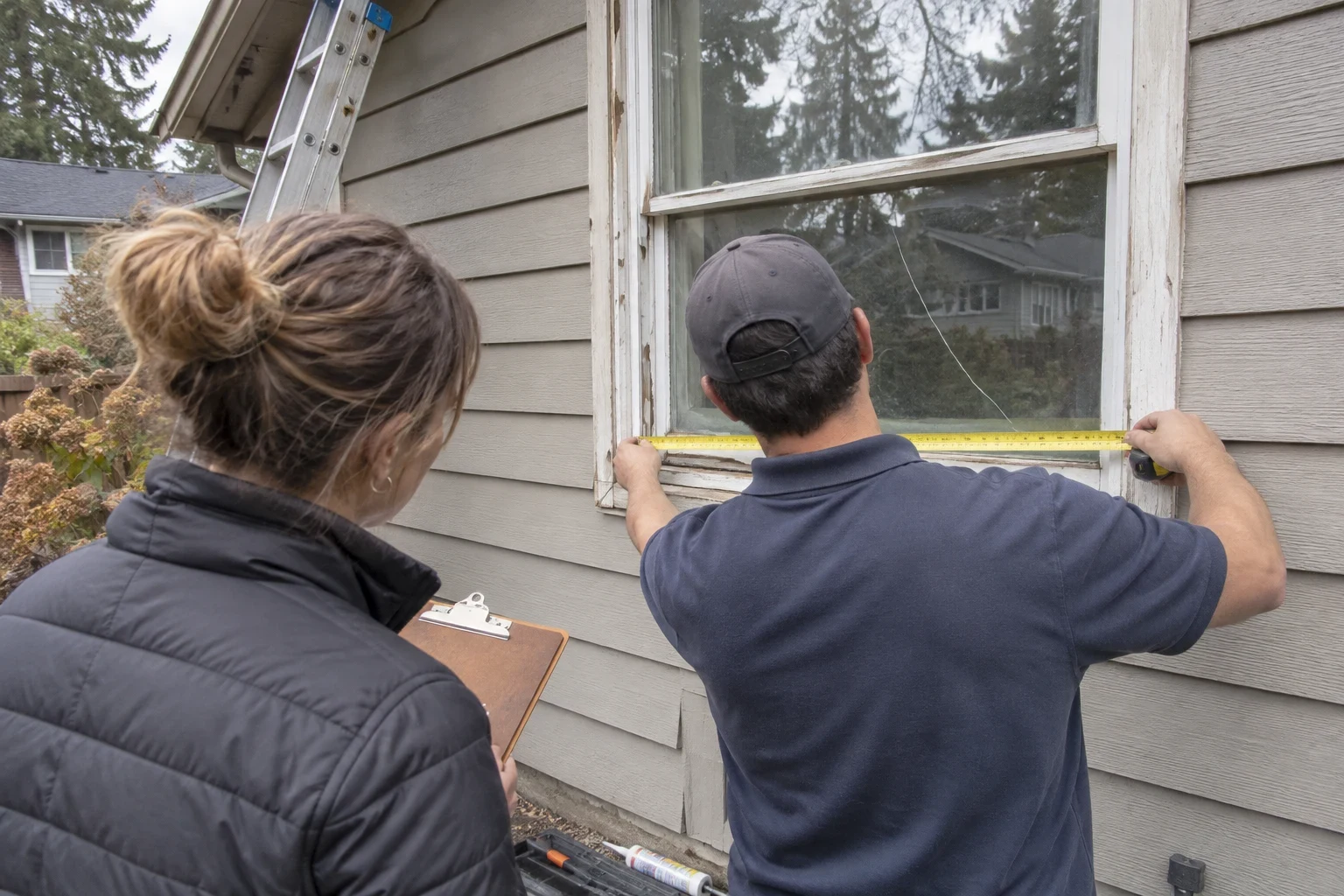
We measure each opening at several points across the width and height and check it for square. Custom units are built to the smallest dimension so they fit without forcing.
Insert or full-frame, explained
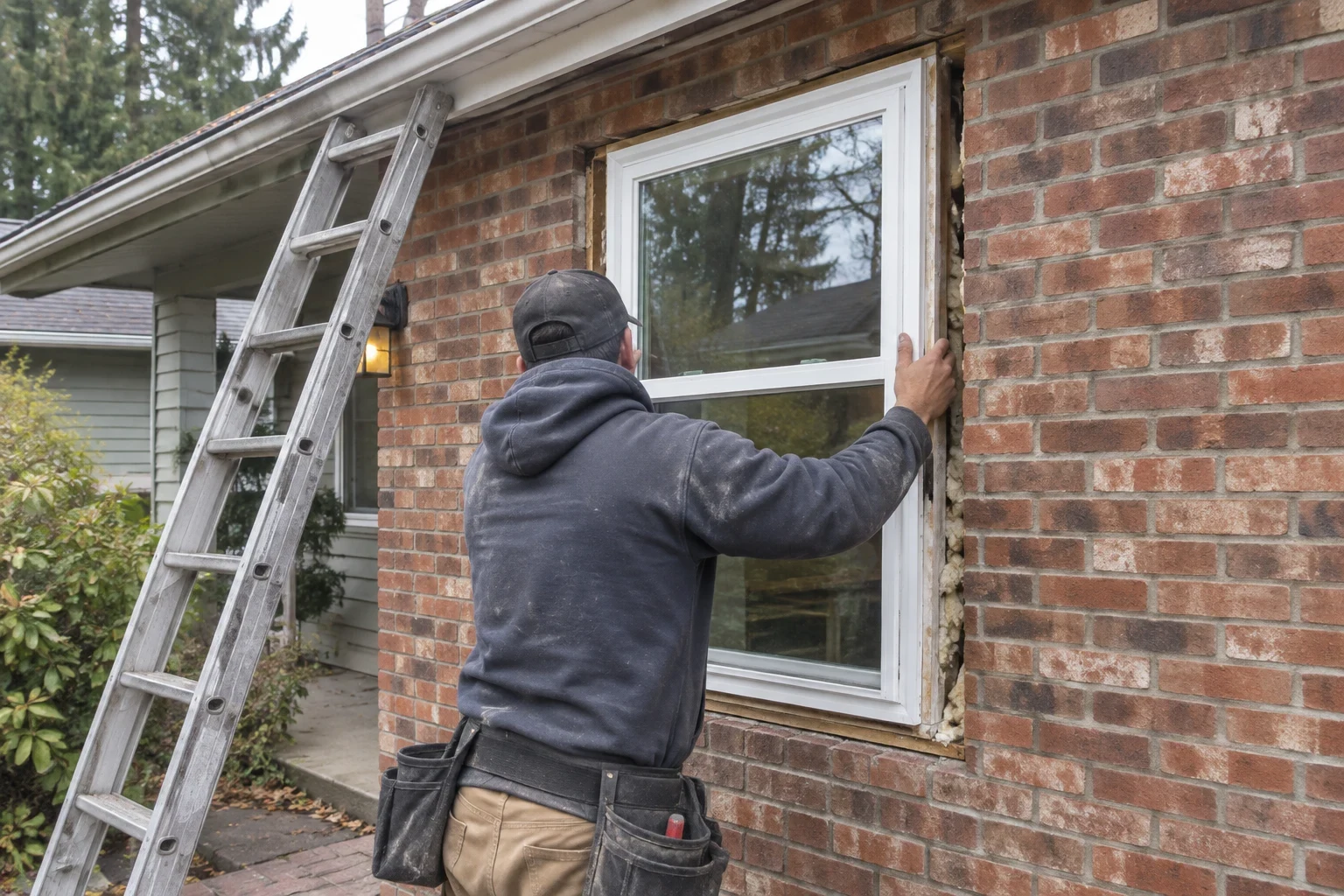
An insert install keeps the existing frame and trim when they are solid. Full-frame removes everything down to the rough opening so we can inspect the sheathing and replace rotted framing. We show you which one your windows need and why.
Frame and glass choices
We install vinyl, fiberglass and wood-clad windows. We walk you through low-E coatings, argon fill and U-factor ratings so the glass package meets state energy code and suits the direction each window faces.
Flashing and sill pans
On full-frame work we install a sloped sill pan and shingle-lapped flashing tape so any water that gets behind the trim drains outward. This is where most leaks start, so we do not skip it.
Insulation and sealing
We fill the gap between frame and opening with low-expansion foam, which will not bow the frame the way standard foam can. Exterior joints get a backer rod and a flexible sealant rated for exterior movement.
Haul-away and cleanup
We protect floors and furniture near each opening, remove the old units and debris, and vacuum before we leave.
Signs your windows are due
- Fog between the panes
- Haze or droplets inside the glass mean the edge seal has failed and the gas fill has escaped. The unit has lost most of its insulating value and cannot be cleaned from the inside.
- Condensation on the frame
- Water beading on aluminum frames or pooling on the sill each winter morning points to cold frames. Over time that water stains drywall and feeds mold.
- Soft or dark wood at the sill
- Press the sill and the trim below it with a screwdriver. If it gives, water has been getting into the wall, and a full-frame replacement lets us repair the opening.
- Drafts and cold spots
- A candle flame that flickers near a closed window means air is leaking past worn weatherstripping or a gap in the frame.
- Sashes that will not lock
- Warped vinyl or swollen wood sashes that no longer align with the lock can leave a window both drafty and less secure.
How the job runs
- 1
Consultation and inspection
We look at each window inside and out, check the sills for rot, and talk through materials and glass. You get a written line-item estimate with no pressure to decide that day.
- 2
Final measure and order
After you choose, we take final measurements and order units built to size. Production takes several weeks, so we schedule install dates with fall weather in mind.
- 3
Install day
Our crew lays drop cloths, removes the old sashes or frames, and sets each new unit level, plumb and square. Each window is flashed, foamed and sealed before we move to the next, so no opening sits open overnight.
- 4
Walkthrough
We open, close and lock every window with you, explain the care of each type, and leave your home clean.
What moves the price
Every home is different, so we price by the opening rather than a flat rate. Your written estimate lists each window and what it involves. We also offer flexible payment options, and we explain them on the call.
- Frame material
- Vinyl is the most economical. Fiberglass costs more but expands with temperature much like glass, so seals stay tighter. Wood-clad sits at the top.
- Insert versus full-frame
- Full-frame takes more labor and new exterior trim, but it is the right choice when the old frame or sill is damaged.
- Size, style and access
- Large picture windows, specialty shapes and second-story openings that need ladders or staging all add time.
- Glass package
- Triple-pane glass, extra low-E layers, tempered glass near doors and tubs, and laminated glass for sound each change the unit cost.
- What is behind the trim
- Rotted framing or sheathing found during a full-frame tear-out has to be repaired before the new window goes in. We photograph it and agree on the fix before doing it.
Window replacement questions
- When should I schedule window replacement?
- Sealants and flashing tapes cure best on dry, mild days, and that window runs from late spring into early fall. New units are built to order and take several weeks, so placing your order in spring or early summer puts the install ahead of the returning rain. We still install in cooler months, opening and closing one window at a time.
- What happens if it rains on install day?
- A light shower is workable because only one opening is ever uncovered, and each one is closed up before we move on. If the rain turns steady and heavy, we hold off on exterior sealing or move the date so no sealant goes onto a wet surface.
- How long will the work take?
- Most installs are finished in a single day. Larger homes, or full-frame jobs where we find framing that needs repair, can run longer, and your estimate spells that out ahead of time.
- Do I need a permit?
- Swapping a window into the same opening usually does not require one. Making an opening larger, changing structure, or altering a bedroom egress window can, and when that applies we pull the permit and book the inspection.
- Will new windows stop the condensation?
- They reduce it a great deal, since warm-edge spacers and insulated frames keep the inside surfaces warmer. If indoor humidity runs very high, some fog can still form on the glass during a cold snap, so running your bath and kitchen fans makes a difference.
Get your windows ready before the wet season
Tell us how many windows you have and what they are doing. We will set a time to inspect them and give you a straight answer on replacement.