ServicesCommercial Windows
Commercial Windows in Sammamish
We replace failed glass and tired frames in offices, retail spaces and small commercial buildings. You get tighter openings, safety glass where the code calls for it and an install phased so your doors stay open while we work.
Window work for small commercial buildings
Commercial openings take more abuse than residential ones. Storefront glass sits in aluminum frames that conduct cold straight through to the inside face. Office windows run larger insulated glass units that lose their edge seals with age. Doors and sidelites see hundreds of cycles a day. When those parts wear out, you pay for it in heating bills, condensation on the sills and complaints from staff sitting next to the glass.
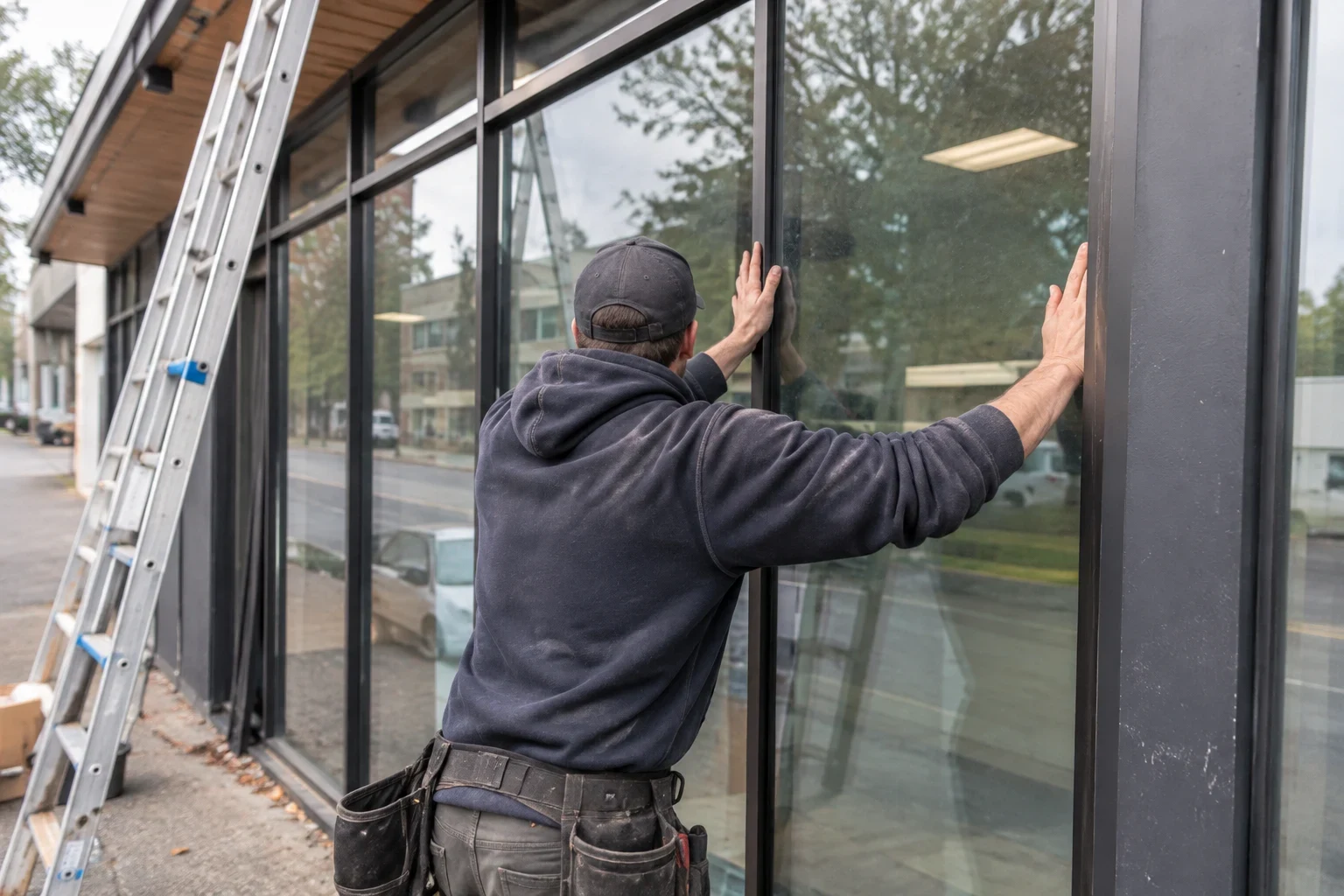
We handle commercial window replacement for owners and managers of offices, shops, clinics and similar small buildings around Sammamish, Issaquah and Redmond. We measure every opening, specify the frame and glass to fit how the space is used, and plan the work in sections so the business keeps running.
Timing matters. Sealants and glazing tapes bond best on dry surfaces, so we aim to schedule exterior work in the drier months and get every opening closed up before the fall rains settle in.
What a commercial window job includes
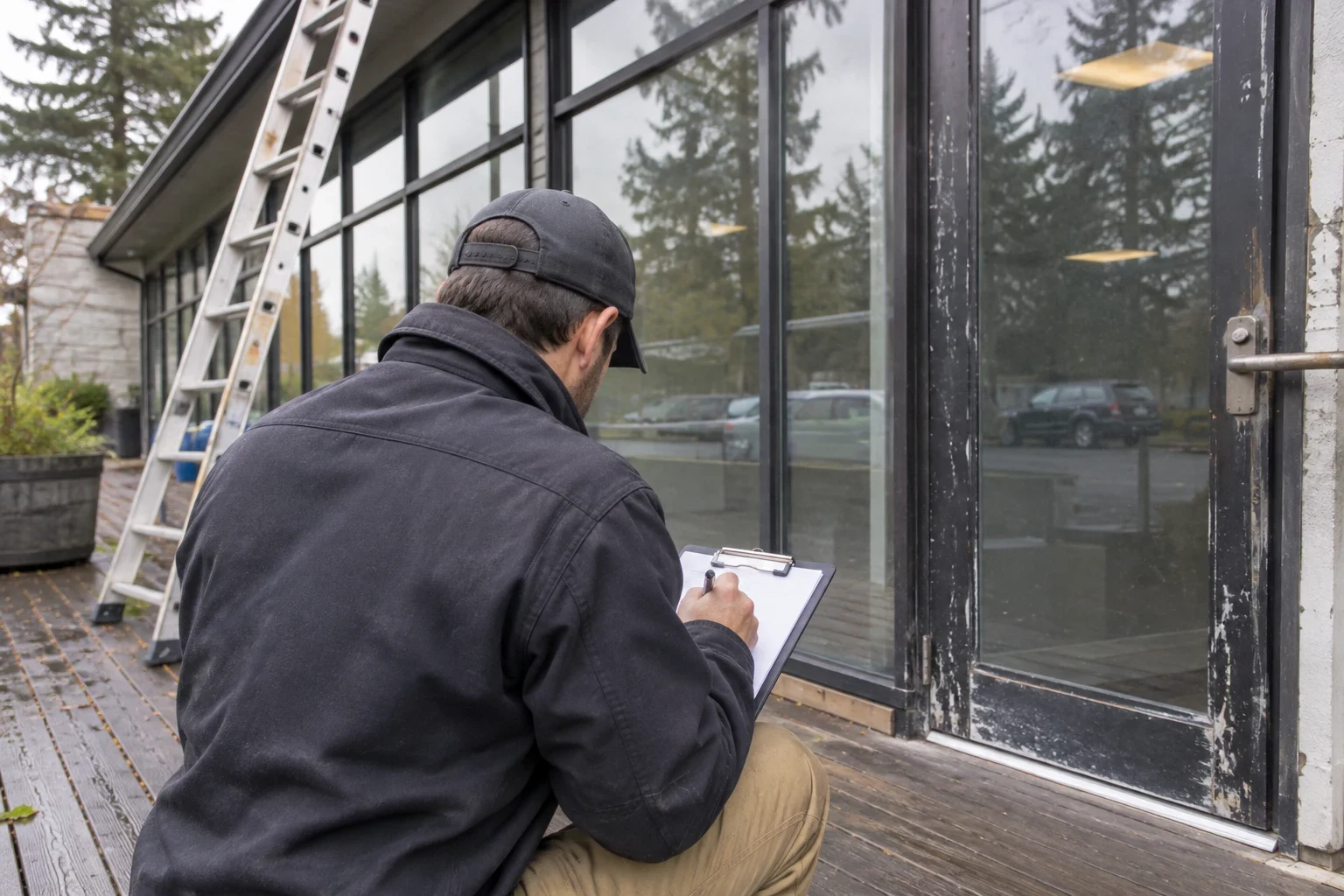
- Opening-by-opening survey
- We measure each rough opening, check the sill and framing for water damage, and note which units are fixed, operable or part of a storefront system. You get photos of anything we find behind the old frames.
- Frame system selection
- We match the frame to the building: commercial-grade vinyl or fiberglass for punched office windows, thermally broken aluminum for storefronts. A thermal break is a polyamide or poured strip between the inner and outer aluminum that stops the frame from sweating in cold weather.
- Glass specified for the location
- Building code typically calls for tempered or laminated safety glass in panels beside a door, panels that sit low near the walking surface and oversized lites. We also pick low-E coatings and tints by orientation, because a storefront facing west absorbs the strongest afternoon sun.
- Weatherproofing at the perimeter
- Every frame gets sill pans or flashing where the wall allows it, backer rod and sealant at the joints, and properly lapped water barriers. Most commercial leaks start at the perimeter, not the glass.
- Phased installation and cleanup
- We remove and replace in sections so no opening is left unsecured overnight. Old glass and frames leave with us, and we vacuum and wipe down each area before moving on.
Signs your commercial windows are due
Fog between the panes
Haze or mineral streaking trapped inside an insulated unit tells you the perimeter seal has broken down and the insulating gas has leaked out. Cleaning will not touch it, because the residue is between the lites.
Wet sills in winter
Water beading on aluminum frames on cold mornings points to frames without a thermal break. That moisture stains finishes and can rot the wood or drywall below.
Leaks after a long rain
Shrunken gaskets, cracked sealant or failed glazing tape let wind-driven water past the frame. Stains on the ceiling tile or carpet near a window are the usual first clue.
Hot or cold workstations
If staff near the glass run space heaters in January or fans in August, the glass and frames are not holding temperature.
Vents that stick or will not lock
Worn operators, stripped hinges and broken locks on operable windows are a security issue as well as a draft. Sometimes a repair is enough, and we will say so.
What sets the price of commercial windows
Commercial jobs vary more than residential ones because the glass, frames and access all change from building to building. Your quote reflects what each opening actually needs, line by line. Flexible payment options are available.
Frame system
Thermally broken aluminum storefront costs more than commercial vinyl, and it is the right choice for large spans and heavy-use entries.
Glass specification
Tempered, laminated, low-E and tinted glass each add cost. The location of each panel often decides which ones the code requires.
Size, height and access
Large lites need more crew and sometimes a lift. Second-story glass over a sidewalk or parking area takes extra setup.
Hidden damage
Rotted sills, failed flashing or corroded anchors found during removal have to be fixed before new frames go in. We photograph it and price it before doing the work.
Phasing and scheduling
Working in small sections or outside normal hours to keep the business open adds labor time.
How a commercial project runs
- 1
Walkthrough and measurements
We visit the building, measure each opening and talk through your hours, foot traffic and any landlord rules. We look at the condition of the framing before recommending anything.
- 2
Written line-item quote
You get a quote that lists each opening, the frame and glass spec, and any repair to the surrounding wall. If replacing a section is not needed, we tell you.
- 3
Permit and ordering
Where the city requires a permit for the change, we pull it. Commercial glass is made to order, so we use the lead time to set an install date in dry weather.
- 4
Phased install
We work one elevation or room at a time, protect floors and fixtures, and close every opening before we leave each day. Sealant goes on clean, dry surfaces so it cures properly.
- 5
Final check
We test operable units and locks, check the sealant lines and walk the job with you. Any inspection sign-off is handled before we call it finished.
Commercial window questions
Can you work while we stay open?
Yes, in most cases. We phase the work so only a few openings are out at a time and every one is closed before we leave. For storefronts we plan around your busiest hours.
Do I need my landlord's approval?
If you lease, usually yes. Many leases cover exterior glass and storefront appearance. We can provide the spec sheets and quote your property manager will want to see.
Is a permit required to replace commercial windows?
It depends on the scope. Changing an opening size, a storefront system or safety glazing often needs one, while like-for-like glass swaps often do not. We check and pull the permit when it is required.
When is the best time of year to schedule?
Late spring through early fall gives the dry surfaces that sealants need. Because commercial glass is made to order, calling a few months ahead lets us install before the wet season.
Will new windows lower our energy costs?
Replacing single-pane glass or non-thermally broken aluminum usually makes a noticeable difference in comfort and heating load. How much depends on how much glass you have and which way it faces, and we will give you an honest read during the walkthrough.
Plan your commercial window work before the rains
Tell us about your building and which openings are giving you trouble. We will walk the space, explain the options and give you a written quote with no pressure to sign.